




Most B2B websites do not have a traffic problem. They have a pipeline problem. A b2b seo audit is how you tell the two apart, because it grades organic search against qualified demand instead of sessions.
The pattern repeats across every B2B site we open. Pages rank for terms buyers never type. The audit checks technical health, then stops before anyone asks which page created a demo or a signed deal. Rankings climb. Sales feels nothing.
This guide gives you the seven-part audit we run for B2B SaaS, fintech, and law firm clients. Every part connects a finding to pipeline. You get the checks, the thresholds, the tools, and a 30/60/90 plan for what you find.
Our track record: 320+ businesses scaled, 45,000+ leads delivered, 230% average ROI, 19+ years of B2B work across three continents. This is the audit behind it.
What is a B2B SEO audit?
A b2b seo audit is a structured review of a B2B website across technical health, on-page setup, keyword coverage, content, authority, AI search visibility, and conversion tracking, scored against one question: is organic search producing qualified pipeline?
That last clause is the whole difference. A general audit ends at rankings. A B2B audit ends at revenue.
Seven areas belong in scope:
- Technical: crawling, indexing, speed, rendering, site architecture
- On-page: titles, headings, internal links, schema, intent match
- Keywords: coverage by funnel stage, not by search volume
- Content: what to keep, update, merge, or remove
- Off-page: referring domains, brand mentions, relevance over raw authority scores
- AEO and entity presence: whether AI answers cite you at all
- Conversion and attribution: which organic pages create pipeline in the CRM
Three facts about B2B buying explain why the standard is different. Gartner puts a typical buying group for a complex B2B solution at six to ten decision makers, each arriving with four or five pieces of independently gathered research. Forrester found a considered B2B purchase averages 27 interactions across channels. Gartner also found buyers spend only 17% of their total buying time meeting suppliers.
Most of the decision happens in content nobody on your team is present for. The audit has to check whether the right people find the right page, and whether anyone can prove it afterward.
How a B2B SEO audit differs from B2C or ecommerce
| What you check | B2C or ecommerce | B2B |
| Keyword set | Thousands of product and category terms | A few hundred terms, low volume, high value |
| Decision unit | One shopper, one session | Six to ten decision makers over months |
| Success metric | Transactions and revenue in analytics | Demos, RFPs, and closed deals in the CRM |
| Intent signals | Price, reviews, shipping, discount | Vendor, comparison, alternatives, pricing, RFP, SOC 2 |
| Proof of ROI | Last click is usually enough | Multi-touch attribution and lifecycle stages are required |
| Content job | Sell the item | Arm an internal champion to sell you internally |
When should you run one?
Run one when any of these are true:
- Traffic is flat or rising, but demo requests are not
- You are planning a redesign, replatform, or domain migration
- Google Search Console impressions or clicks dropped for more than one month
- You just raised a round and organic has to carry more of the number
- You changed your ICP, pricing model, or category story
- Nobody in the room can name which organic pages created last quarter pipeline
Why a B2B SEO audit matters for pipeline in 2026
Two things happened at the same time. Paid acquisition got more expensive, and search results started answering questions without sending a click. Both raise the value of an audit that measures pipeline.
On cost: Google Ads cost per lead averaged $79.14 across industries in 2026, up 18.7% year over year, and average B2B SaaS search CPC reached $5.34, up 29% year over year. First Page Sage 2026 benchmark data puts paid cost per lead for B2B SaaS at $310 against $164 organic, and financial services at $761 paid against $555 organic.
On return: First Page Sage reports 748% average ROI for B2B SEO over three years, with B2B SaaS at 702% and a breakeven around seven months. Those are one firm’s campaign averages, not a promise for your site, but the direction is consistent across the benchmark reports.
On clicks: SparkToro data reported by Search Engine Land found 68% of Google searches ended without a click in early 2026. Bain & Company’s September 2025 analysis of zero-click search found B2B software categories lost as much as 30% of click-through rate, and that most B2B sites tracked lost traffic year over year.
The part most teams miss: the clicks that survive are better. Semrush found AI search visitors convert at several times the rate of traditional organic visitors, and Ahrefs published a case where AI-referred sessions were 0.5% of traffic but 12.1% of signups.
The honest 2026 read: sessions are a worse proxy for demand than they were two years ago. Citation, buying-stage coverage, and CRM-verified pipeline are better ones. Audit what still predicts revenue.
B2B SEO audit checklist: the 7-part framework
Here is the b2b seo audit checklist we run. Work it in order. Each part feeds the next, and the last part is what makes the first six worth doing.
Part 1. Technical SEO audit for B2B
Confirm search engines and AI crawlers can reach, render, and index the pages that carry buying intent.
- Crawl the site with Screaming Frog or Sitebulb, then compare the crawl against Google Search Console index coverage. Anything crawlable but not indexed needs an explanation.
- Check Core Web Vitals against Google’s thresholds: LCP at or under 2.5 seconds, INP at or under 200 milliseconds, CLS at or under 0.1, measured at the 75th percentile of real users.
- Benchmark honestly. Only 55.9% of origins passed all three Core Web Vitals in May 2026 CrUX data, and Whitehat SEO reported an average B2B mobile LCP of 7.05 seconds in 2025.
- Validate the XML sitemap, robots.txt, canonical tags, and hreflang if you sell into multiple regions.
- Test JavaScript rendering. React and Next.js sites often ship pricing tables and comparison grids that only appear after hydration.
- Fix HTTPS errors, redirect chains, orphan pages, and duplicate parameter URLs.
- Pull server logs. They show which pages Googlebot and AI crawlers actually request, which is rarely the list you care about.
Tools: Screaming Frog, Ahrefs Site Audit, Google Search Console, PageSpeed Insights, and the Chrome UX Report.
Part 2. On-page SEO audit
An on-page seo audit checks whether each URL claims one job and proves it above the fold.
- Title tag, H1, and meta description all point at the same search intent
- One primary keyword per URL, confirmed with a cannibalization scan in Ahrefs or Semrush
- Internal linking depth of three clicks or fewer from the homepage to any revenue page
- Primary keyword in the first 100 words, the H1, the URL, and at least one H2
- Clean H2 and H3 hierarchy, descriptive alt text, semantic HTML, and schema that matches the page type
Part 3. B2B keyword research audit
B2B keyword research is a coverage problem, not a volume problem. Audit which buying-stage questions have no page.
- Segment every target term by intent: informational, commercial, transactional, navigational
- Map to stage. Top: what is, how to. Middle: best, alternatives, versus. Bottom: pricing, demo, RFP
- List the bottom-funnel terms with no page at all. That gap is usually the fastest pipeline win in the audit
- Flag pages ranking for the wrong intent, which is a rewrite, not a link-building problem
- Check enterprise modifiers your buyers add: for enterprise, SOC 2, HIPAA, on-premise, API
Part 4. B2B content audit
A b2b content audit answers one question per URL: keep, update, merge, redirect, or delete.
- Build an inventory: URL, target keyword, intent stage, sessions, conversions, backlinks, last updated date
- Score each page, then assign one action. No page stays unscored
- Look hard at freshness. HubSpot reported that 76% of monthly blog views and 92% of blog-sourced leads came from posts published in earlier months, and that updating older posts raised organic traffic by about 106%
- Freshness now affects AI citation too. Seer Interactive found 65% of AI crawler activity landed on content published in the past year
- Check E-E-A-T signals: named authors with credentials, first-party data, client results
Part 5. Off-page and authority audit
Judge relevance before you judge authority scores.
- Pull the backlink profile in Ahrefs or Semrush. Review referring domains, topical relevance, and anchor text patterns
- Audit for toxic links, not just missing ones. One Houston personal injury firm came to us after four years with another agency, with more than 10,000 toxic referring domains quietly holding rankings down
- Run a competitor gap: ten competitors, three categories of gap, ranked by relevance to your ICP
- Find unlinked brand mentions and claim them
- Check digital PR presence: expert sourcing platforms, industry publications, podcasts, and review sites
Part 6. AEO, GEO, and AI search audit
This is the section most 2024-era audit templates are missing. Check whether AI answers cite you.
- Run your 20 highest-intent buyer questions through Google AI Overviews, ChatGPT, Perplexity, and Gemini. Record who gets cited
- Check extractability: a direct 40 to 60 word answer under each question heading, FAQ and HowTo schema, comparison tables
- Confirm entity consistency across Wikidata, Crunchbase, LinkedIn, G2, and Capterra. Mismatched names and categories confuse retrieval
- Verify your robots.txt does not block GPTBot, ClaudeBot, PerplexityBot, or Google-Extended unless that is a deliberate policy decision
- On llms.txt, stay skeptical. Google says the file is not needed for AI Overviews or AI Mode, and a Search Engine Land test of ten sites found no effect on eight. Publish one if it is cheap, but do not count it as a fix
Part 7. Conversion and pipeline attribution audit
This part turns the audit into a business case.
- Confirm GA4 events fire for demo requests, pricing views, contact forms, and content downloads
- Check the CRM handoff. Organic source data should survive into HubSpot or Salesforce lifecycle stages
- Measure conversion by landing page: visit to MQL, MQL to SQL, SQL to opportunity, opportunity to won
- Audit form friction, above-fold CTAs, and calendar embeds on the pages that already rank
- Name the five organic pages that touched pipeline last quarter. If nobody can, fix tracking before you write another post
Technical SEO audit for B2B: a closer look
A technical seo audit for b2b breaks in places consumer audits rarely reach. Four of them cause most of the damage.
JavaScript rendering. Product-led sites ship comparison tables, pricing tiers, and integration lists through client-side rendering. Google can often render them. AI crawlers frequently do not. Test with the URL Inspection tool and by fetching the raw HTML. If your differentiators only exist after hydration, they are invisible where buyers now research.
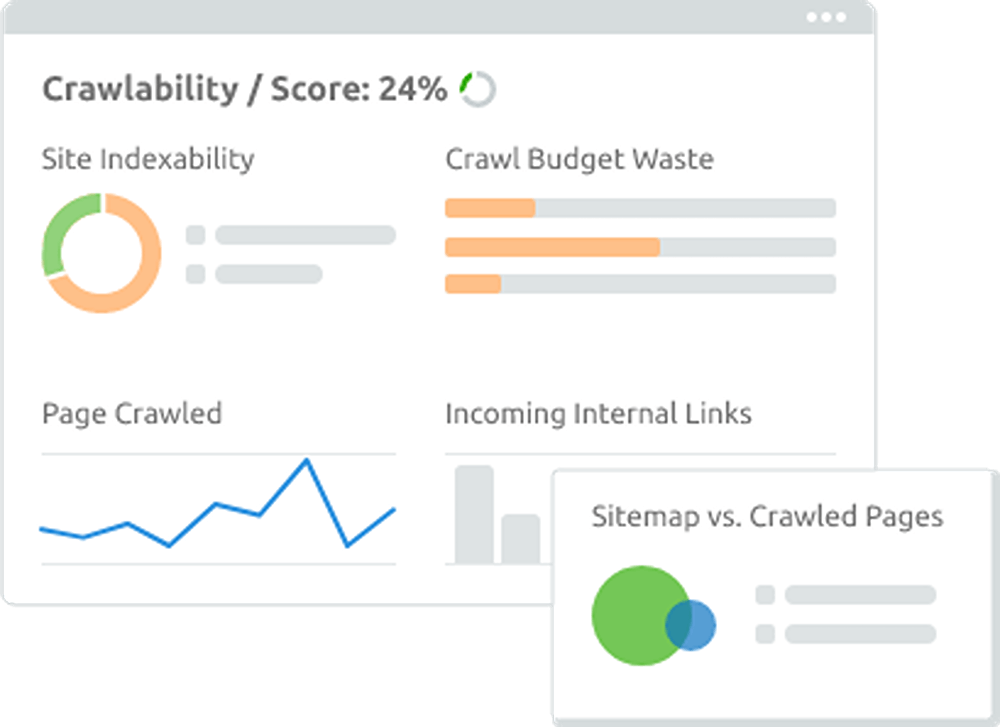
Faceted navigation on docs and resource libraries. Filter combinations generate thousands of near-duplicate URLs and drain crawl budget from the pages that convert. Decide which facets are indexable, then enforce it.
Multi-region hreflang. SaaS companies serving US, UK, and EU markets often ship broken return tags. The result is the wrong regional page ranking, with pricing and compliance copy the reader cannot use.
Staging leaks. Staging environments get indexed more often than teams admit. Run a site query across your subdomains. Five minutes, and it occasionally saves a quarter.
One example of what fixing the foundation does. When Quantal Security came to us, their site was on Wix with no content architecture behind it. We migrated to WordPress, rebuilt the messaging, and published SEO content against buyer risk language. Organic keyword rankings grew 220% in the first six months, and qualified lead pipeline doubled across the engagement.
On-page SEO audit: the 12-point B2B page teardown
Use this on any page that is supposed to generate pipeline. Twelve checks, one pass rule each.
| Element | Pass rule | Common B2B mistake | Fix |
| Title tag | Under 60 characters, primary keyword near the front | Company name first, keyword last | Lead with the buyer term, end with the brand |
| Meta description | 150 to 155 characters, keyword plus one benefit | Auto-generated from the first paragraph | Write it by hand, name the outcome |
| H1 | One per page, contains the primary keyword | Clever headline with no search term in it | Say the thing the buyer typed |
| URL | Short, readable, keyword included, no dates | Nested four folders deep | Flatten and 301 the old path |
| First 100 words | Direct answer plus primary keyword | Three paragraphs of context first | Answer in sentence one, expand after |
| Internal links | Three clicks or fewer from home, links use real anchors | Click here, learn more | Anchor the target term to the money page |
| Alt text | Under 125 characters, describes the image | Blank or a file name | Describe it, use the keyword once where natural |
| Schema | Matches page type and validates | Organization markup on every page and nothing else | Add Article, FAQPage, or HowTo as fits |
| CTA | One primary action per page | Five competing CTAs above the fold | Cut to one, repeat it lower on the page |
| Above-fold value prop | Names the buyer problem in one line | Names the product category instead | Rewrite around the pain, not the feature |
| Social proof | One logo, result, or quote above the fold | Proof buried on a separate page | Move one number up |
| Page speed | LCP 2.5s, INP 200ms, CLS 0.1 at the 75th percentile | Lab score looks fine, field data fails | Fix against CrUX field data, not Lighthouse |
B2B keyword research audit
Map every term to a stage, a page type, and a call to action. Gaps show up immediately.
| Keyword pattern | Intent | Funnel stage | Page type | CTA |
| what is [category] | Informational | Top | Pillar guide | Newsletter or checklist |
| how to [job to be done] | Informational | Top | How-to post | Template download |
| best [category] software | Commercial | Middle | Ranked list | Comparison guide |
| [competitor] alternatives | Commercial | Middle | Alternatives page | Demo or trial |
| [you] vs [competitor] | Commercial | Middle | Comparison page | Demo |
| [category] pricing | Transactional | Bottom | Pricing page | Talk to sales |
| [category] for enterprise | Transactional | Bottom | Segment landing page | Book a call |
| [category] RFP template | Transactional | Bottom | Resource plus form | Sales-assisted download |
Then build a competitor overlap matrix: ten competitors down the rows, your bottom-funnel terms across the columns, a mark for whoever ranks in the top ten. Three patterns appear. Terms everyone owns and you do not. Terms nobody owns yet. Terms you own that no longer send qualified traffic. Work the second group first.
B2B content audit
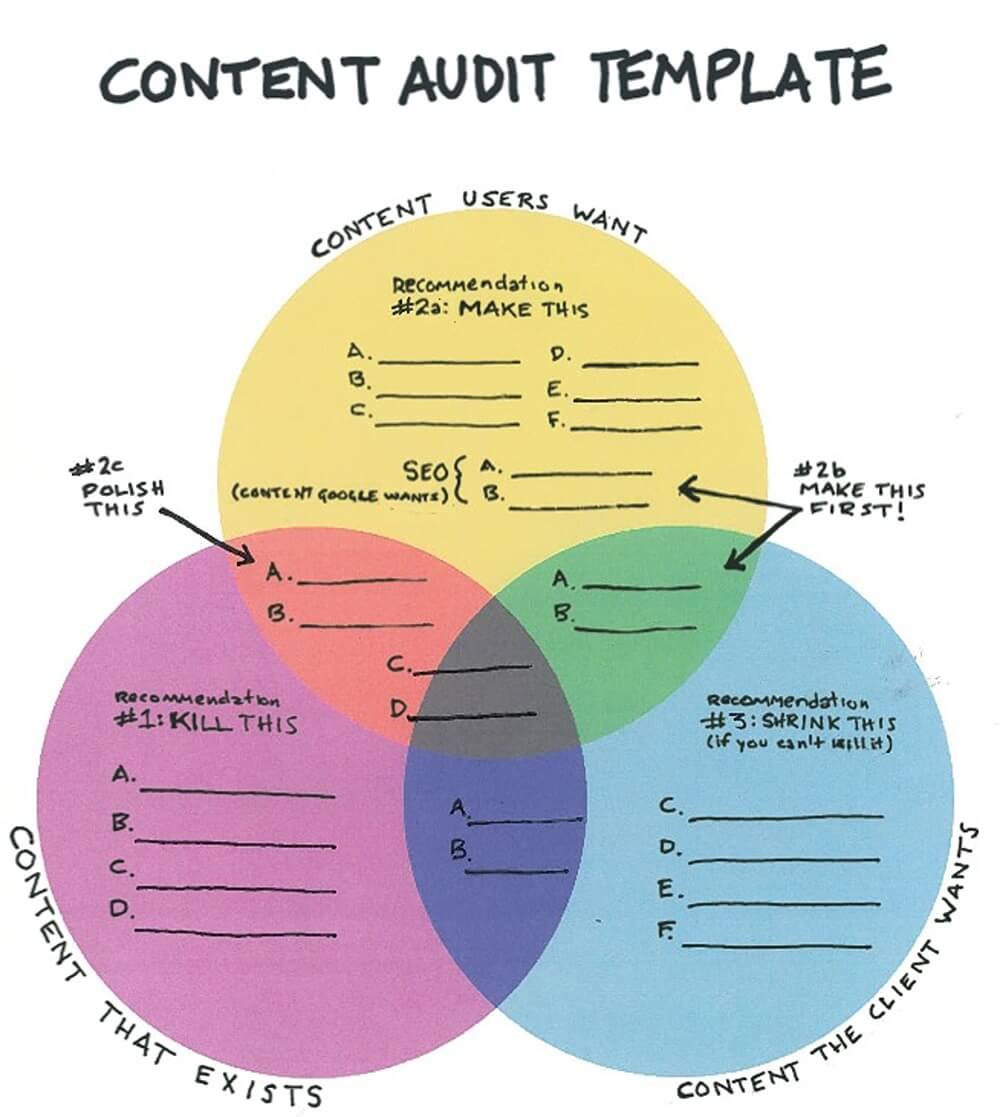
Score every URL on five signals, then let the score pick the action. This keeps the audit out of opinion territory.
| Signal | What to measure | Score 0 to 2 |
| Traffic | Organic sessions over 90 days versus the prior 90 | 0 falling, 1 flat, 2 growing |
| Conversions | CRM-verified leads or opportunities touched | 0 none, 1 some, 2 consistent |
| Backlinks | Referring domains earned, weighted for relevance | 0 none, 1 a few, 2 meaningful |
| Recency | Months since a meaningful update | 0 over 24, 1 twelve to 24, 2 under 12 |
| Intent match | Does the page answer what the ranking query asks | 0 no, 1 partly, 2 yes |
Then apply the decision rule:
- 8 to 10: keep and protect. Add internal links and refresh the data quarterly
- 5 to 7: update. Rewrite the intro for direct answers, add first-party proof, extend to the questions the page misses
- 3 to 4: merge into a stronger page and 301 the weaker URL
- 0 to 2 with backlinks: redirect to the closest relevant page
- 0 to 2 with no backlinks and no conversions: delete it
Most B2B blogs we audit carry a quarter to half of their library in the bottom two bands. Removing it is not a loss. It concentrates authority on the pages that sell.
SEO audit for SaaS: what’s different
An seo audit for saas has to account for the buying motion, because free trial and demo-led products need different pages ranking.
- Trial-led products need bottom-funnel terms that end in a self-serve action: pricing, integrations, alternatives, template and use-case pages
- Demo-led products need pages that arm a champion: ROI content, security and compliance pages, implementation timelines, procurement-friendly comparisons
- Docs SEO is its own project. Developer documentation often out-ranks marketing pages and pulls the highest-intent traffic on the domain. Audit it as a first-class property, not an afterthought
- Changelog and release pages capture branded and feature-level search that competitors target in comparison content
- Integrations pages are usually the largest untapped bottom-funnel set. One page per integration, each answering how it works and what it costs
- Comparison and alternatives pages need honesty to survive. AI answers now summarize them, and one-sided pages get skipped in favor of sources that describe trade-offs
Check one more thing: whether your product name, category, and one-line description match across your site, G2, Capterra, Crunchbase, and LinkedIn. Retrieval systems reconcile entities across sources, and disagreement costs citations.
B2B SEO strategy: turning audit findings into pipeline
An audit that ends in a spreadsheet is a cost. A b2b seo strategy that sequences the fixes is an asset. Here is the 30/60/90 map we use.
| Window | What you do | What you are trying to prove |
| Days 1 to 30 | Technical fixes, indexation cleanup, Core Web Vitals, title and intro rewrites on pages already ranking positions 5 to 15, GA4 and CRM tracking wired | That the foundation holds and pipeline is now measurable |
| Days 31 to 60 | Content refresh on the update band, internal linking to revenue pages, build the missing bottom-funnel pages, add FAQ and HowTo schema | That better coverage converts, not just ranks |
| Days 61 to 90 | New pillar and cluster build, digital PR and expert sourcing, entity cleanup across review sites, AI citation tracking in place | That authority and citation compound past the quick wins |
The sequence matters more than the tactics. Fix measurement first, or you spend 90 days unable to tell which change worked. At Enlimited we run this inside the Demand Engine: positioning and ICP, then demand generation, paid media, SEO and AEO, and automation.
One note on expectations. Our projections and benchmarks are estimates based on past campaigns and public data, not guarantees of future results. B2B SEO compounds on a quarterly clock, not a weekly one.
B2B website audit tools we actually use
A b2b website audit does not need twelve subscriptions. It needs five tools used well.
| Tool | What we use it for | Free or paid |
| Google Search Console | Index coverage, query and page performance, Core Web Vitals field data | Free |
| GA4 | Conversion events, landing page paths, source attribution | Free |
| PageSpeed Insights and CrUX | Field versus lab performance data | Free |
| Schema.org validator and Rich Results Test | Confirm structured data parses | Free |
| Screaming Frog | Crawling, rendering checks, redirect and canonical mapping | Free to 500 URLs, then paid |
| Ahrefs or Semrush | Backlinks, keyword gaps, cannibalization, competitor overlap | Paid |
| Sitebulb | Crawl visualization and technical prioritization | Paid |
| DebugBear | Core Web Vitals monitoring over time, INP debugging | Paid |
| Clearscope or Surfer | Content coverage scoring against ranking pages | Paid |
| HubSpot or Salesforce | Lifecycle stages, source attribution, pipeline by landing page | Paid |
| ChatGPT, Perplexity, Gemini | Manual AI citation checks against buyer questions | Free tier works |
Common B2B SEO audit mistakes (and how to avoid them)
- Auditing traffic instead of pipeline. A page with 200 visits and three demos beats a page with 20,000 visits and none. Score against the CRM
- Skipping bottom-funnel and comparison terms. Alternatives, versus, and pricing pages are where deals get shortlisted, and they are usually missing
- No CRM tie-back. Without lifecycle stages tied to organic source, every recommendation is an opinion
- Chasing domain authority instead of relevance. A link from a niche publication your buyers read beats a high-score link from a site they never open
- Ignoring AEO and entity work. If AI answers cite your competitor for your category question, ranking third is a smaller consolation than it used to be
- Redesigning without a migration plan. URL, template, and CMS changes undo years of equity when nobody maps the redirects first
When to DIY vs hire a B2B SEO agency
Do it yourself when you have an in-house marketer with SEO experience, a site under roughly 100 pages, and a founder willing to make positioning calls. The checklist above is enough. Budget 40 to 60 hours.
Bring in help when the audit crosses functions: a migration, a rendering problem your dev team has deprioritized twice, attribution that has never worked, or a library too large to score by hand.
Look at more than one firm. Directive Consulting, Kalungi, NoGood, Powered by Search, and Refine Labs each work with B2B and SaaS companies and each has a different bias. Ask any of us the same question: show me a client where organic pipeline, not organic traffic, went up, and show me how you measured it.
If you want ours, Enlimited runs the Demand Engine Audit against the same seven parts you just read, and we can help you sequence what to fix first. Start here.
FAQs: Direct answers to the questions B2B teams ask us most.
Next step
Work the seven parts in order, score every page, and fix measurement before content. That alone separates an audit that changes a quarter from one that fills a spreadsheet.
Prefer we run it on your site? Get a free B2B SEO audit.